Join us in embroidering a monumental tapestry as part of Draden van ons Nederlandse slavernijverleden on 27 June, 28 June and 1 July at Bonnefanten. Everyone is welcome, no prior experience is needed.
Dates: Saturday June 27th, Sunday June 28th (during Bonnefanten Free Sunday) and Wednesday July 1st (Keti Koti)
Times: 12:00 – 16:00 (On Bonnefanten Free Sunday: 11:00 – 17:00)
Location: Corridor, 1st floor, Bonnefanten
Admission: Free with a valid museum admission ticket. No registration is required; you are welcome to drop in and join at any time. During Bonnefanten Free Sunday (28 June), admission to the entire museum is free.
Limburg is creating its own tapestry as part of Draden van ons Nederlandse slavernijverleden (Threads of Our Dutch Slavery History), and you can help make it. At Bonnefanten, we welcome everyone who would like to take part in this unique collaborative making process. No prior experience is needed.
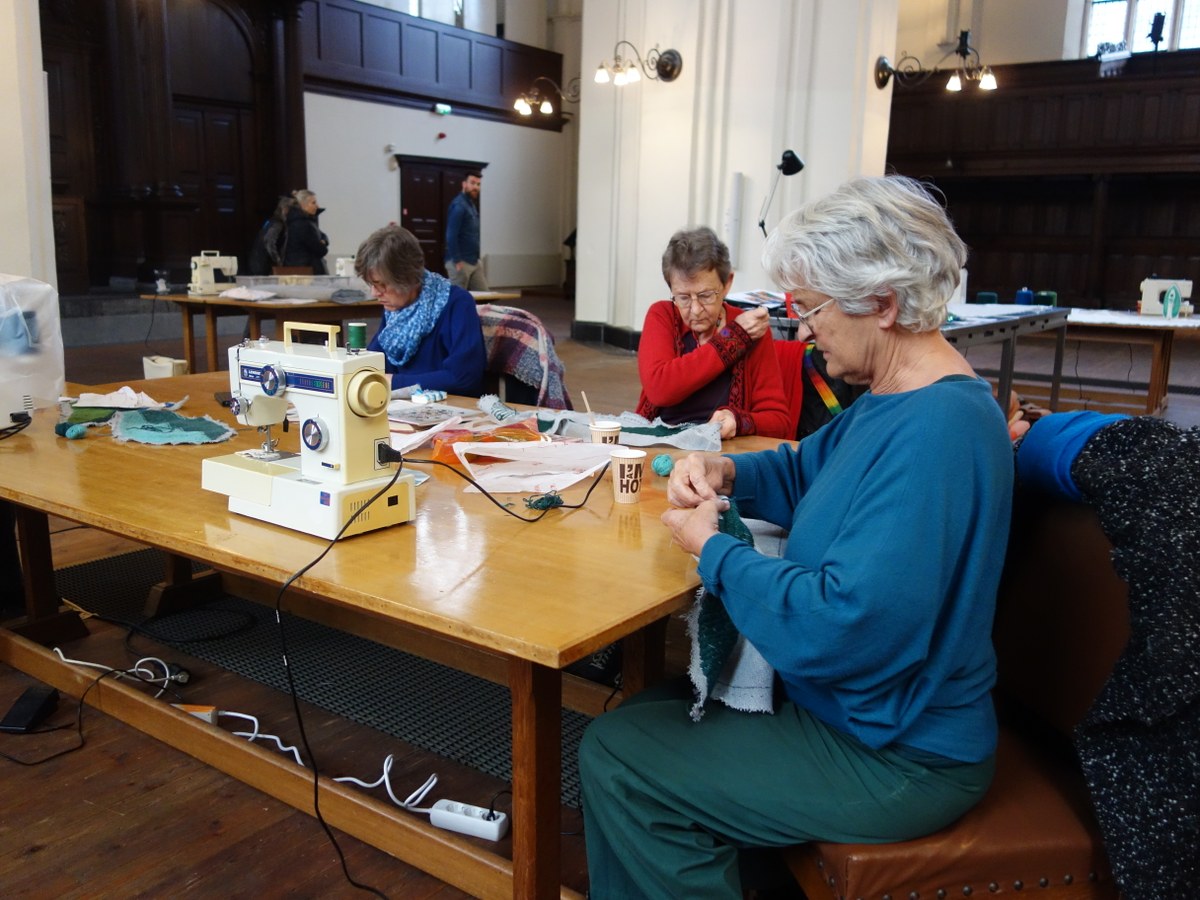
What can you expect?
As a making location, Bonnefanten is part of the Limburg edition of Threads of Our Dutch Slavery History. On 27 June, 28 June and 1 July (Keti Koti), you can contribute by embroidering elements of the Limburg tapestry. Together with dozens of locations across the province, you will help create a textile artwork measuring 35 metres by 2.5 metres.
The project includes two types of locations. At a frame location, a large tapestry frame (5 x 2.5 metres) displays part of the design and offers visitors the opportunity to explore the stories behind the project. At a making location, such as Bonnefanten, you work on the smaller, more detailed elements of the tapestry. These embroidered components will later be assembled into the final artwork.
You will work in an open and welcoming environment, with guidance available to introduce you to the materials and techniques. No experience is required, curiosity is enough. You decide how long you stay and how much you contribute.
Limburgse verhalen in textiel
Draden van ons Nederlandse slavernijverleden brings to light the hidden and shared history of Limburg and the Dutch slavery past. Research conducted by Maastricht University uncovered new and previously overlooked connections, revealing that Limburg, too, was part of colonial networks and systems of exploitation.
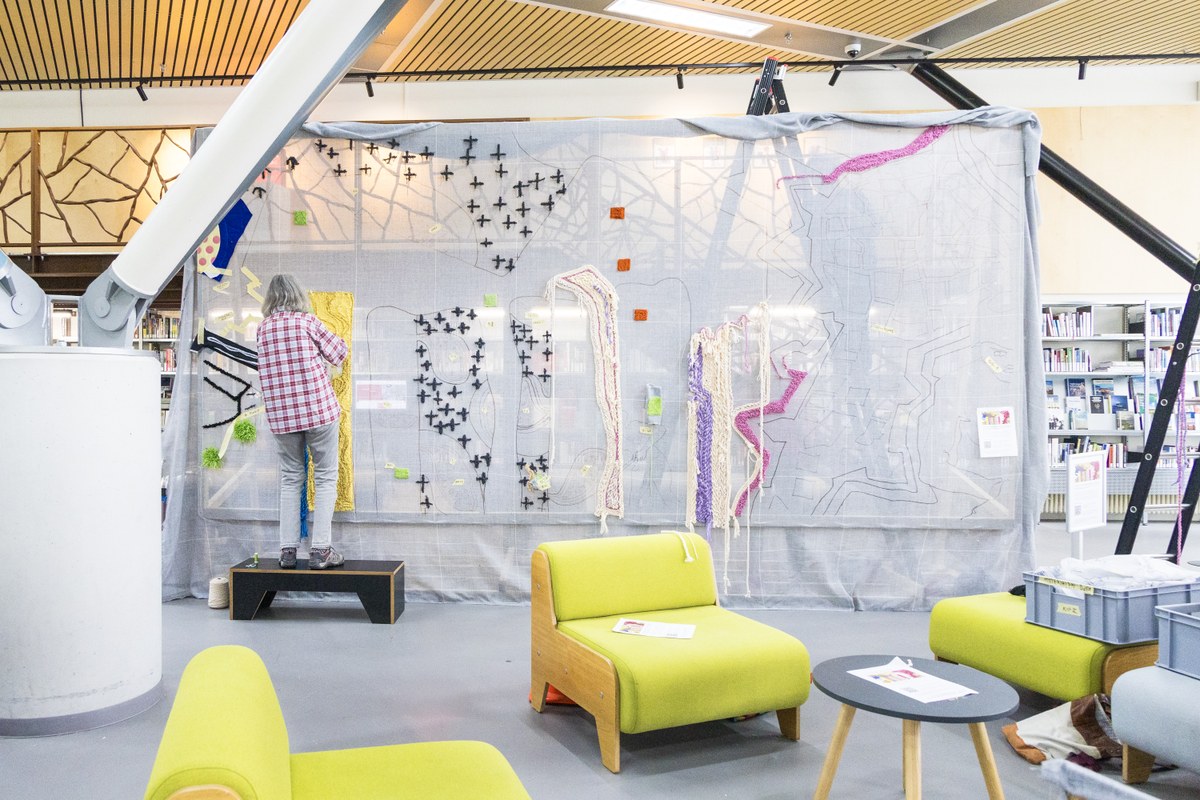
For the tapestry, artist Quinn Zeljak (1998, Venlo) translates these historical insights into a visual design. She works with circular textiles: fabrics that have had a previous life and are now woven into a monumental artwork that reflects reuse, care and attention.
More information about the project can be found on the Draden van ons Nederlandse slavernijverleden website.
Images from previous editions of Draden van ons Nederlandse slavernijverleden in other provinces across the Netherlands.