This exhibition establishes new connections between contemporary art from the Collection Bonnefanten and invites visitors to do the same.
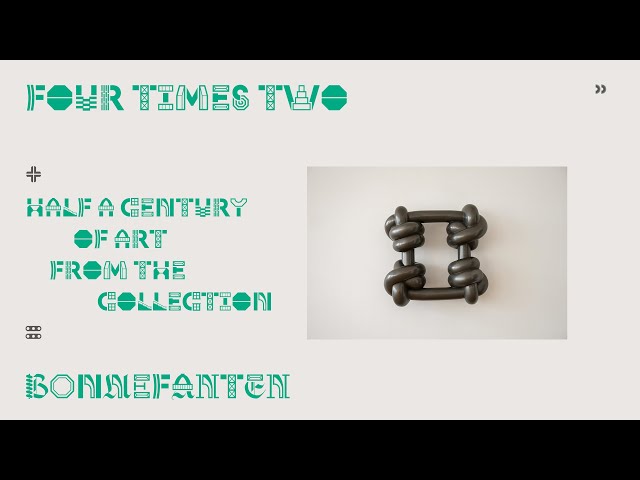
Short Doc
Four times Two
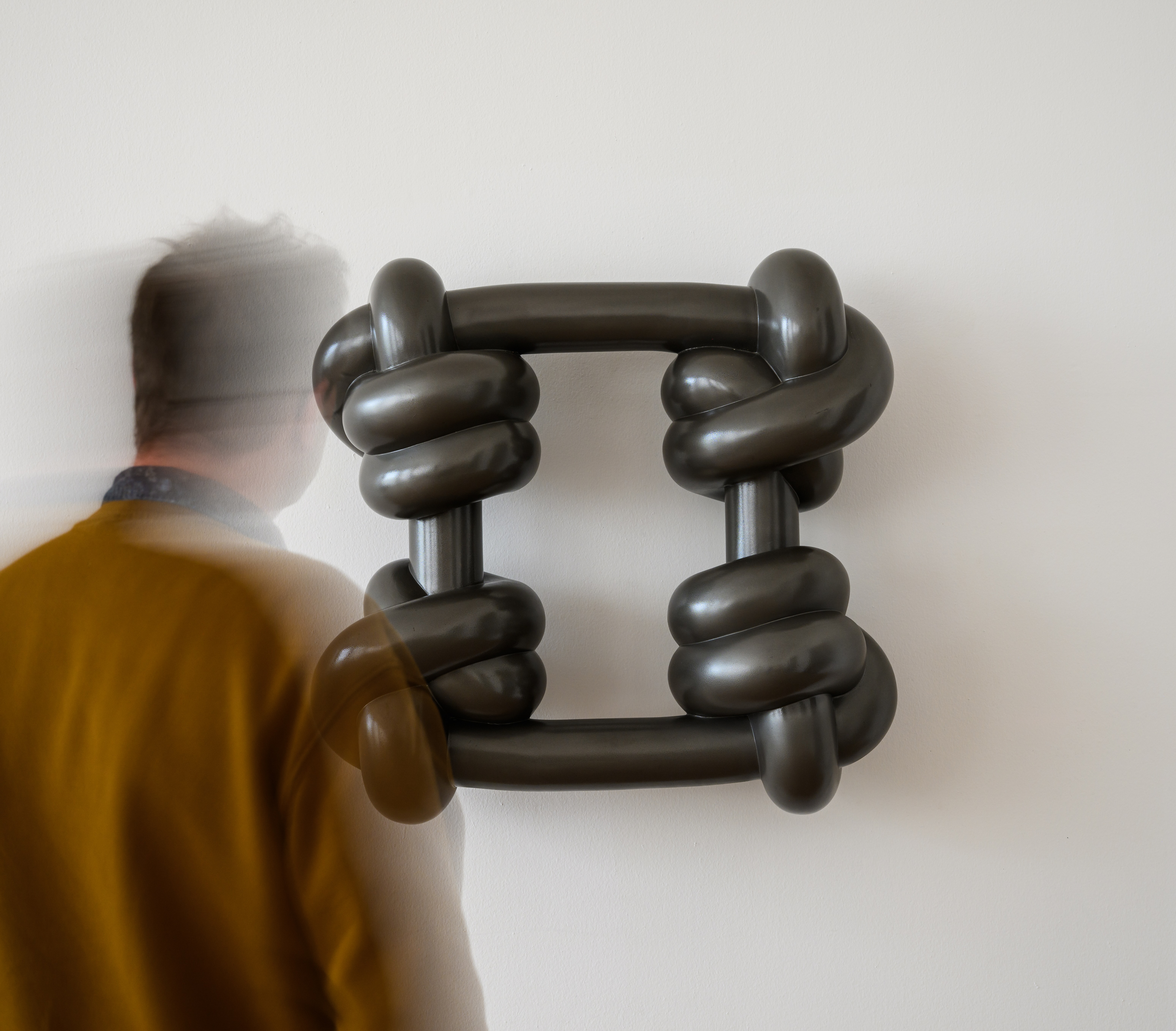
Exhibition overview Four times Two with work by Shinkichi Tajiri, Four times Two (4x2), 1967, polyester, 100 h x 100 w x 40 d cm. Bonnefanten Collection. Photo Jonathan Vos
Four times Two presents half a century of art from the collection (1965–2015). Each room displays work by four artists. Their works are very different. It is up to the visitor to make the connection and discover what links the artworks to each other and to the viewer. As a suggestion or hint, each room has a title.
In the rhythm and transformation room, visitors are first introduced to Shinkichi Tajiri's four-knot work. Rhythm can also be recognised in other artworks in this space. Together, they create movement.
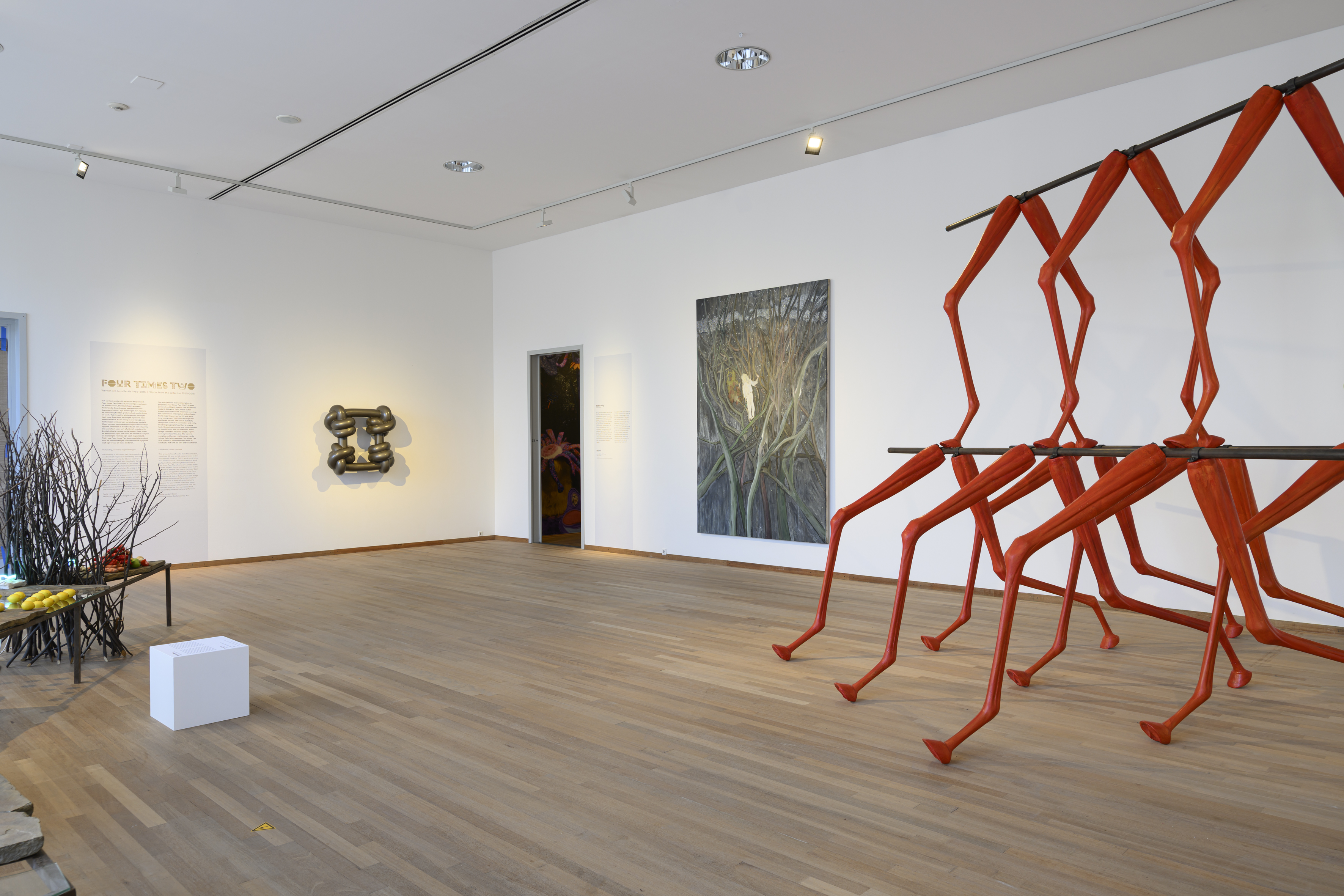
Exhibition overview Four times Two, with works by Peter Doig, Jos Kruit, Mario Merz and Shinkichi Tajiri, Bonnefanten 2025. Photo Peter Cox
Paula van den Bosch, curator 'Four times Two'
"I deliberately kept the wall texts brief so as to give visitors as little information as possible. Everything here revolves around LOOKING at art".
Exhibition overview 'Four times Two', with works by Peter Doig and Jos Kruit, Bonnefanten 2025. Photo Manor Lux
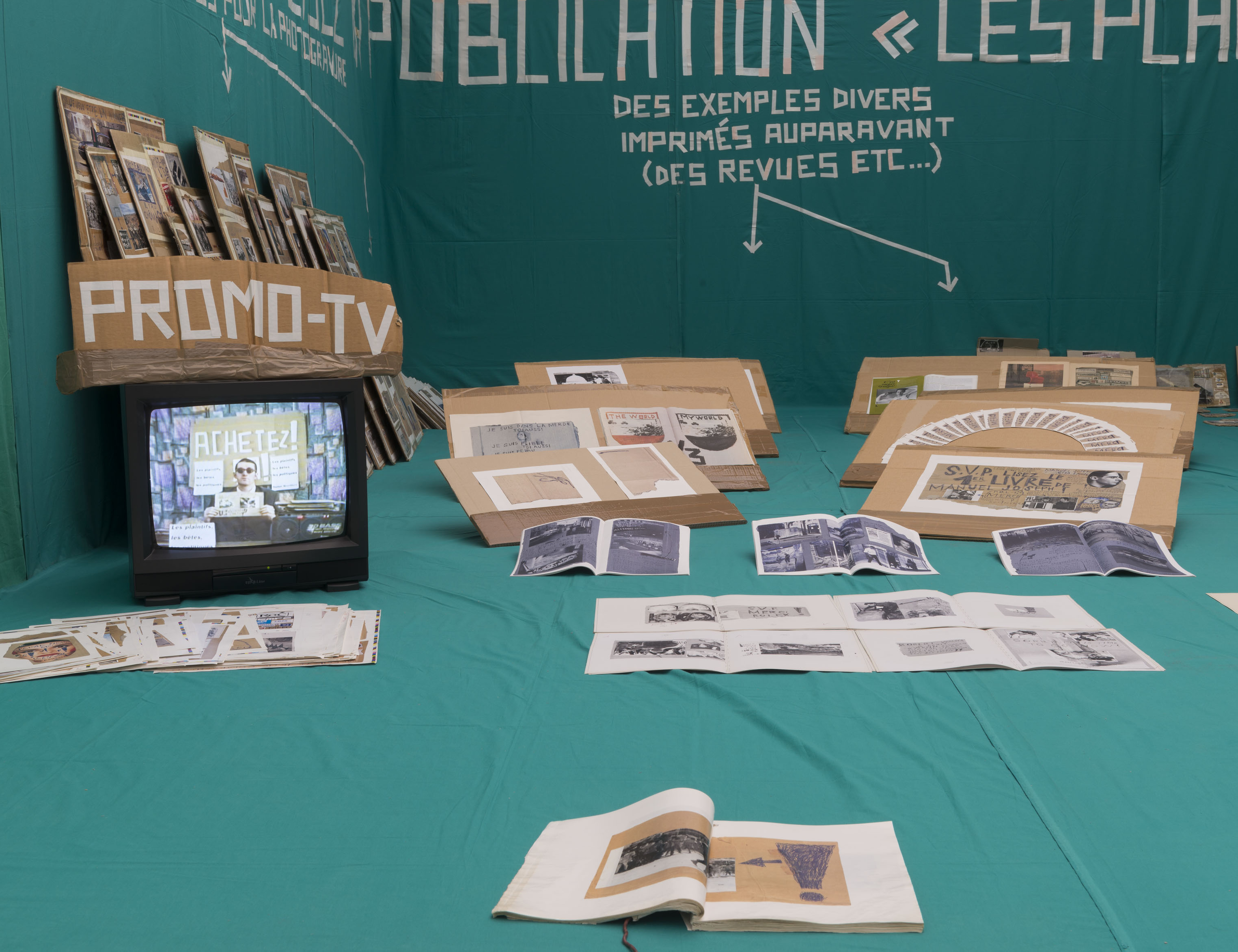
Exhibition overview Four times Two, featuring work by Thomas Hirschhorn (detail), Bonnefanten 2025. Photo Peter Cox
Thomas Hirschhorn is represented in the engagement & desire - room. His installation is made from disposable materials. With it, he seeks a positive way to deal with everyday social and political issues.
Under the heading (un)justice & morality, a video installation by Paul Chan can be seen in a darkened, theatrical setting. In it, he reflects on artistic freedom, moral choices and the limits of the law. The work is inspired by the famous book by Marquis de Sade.
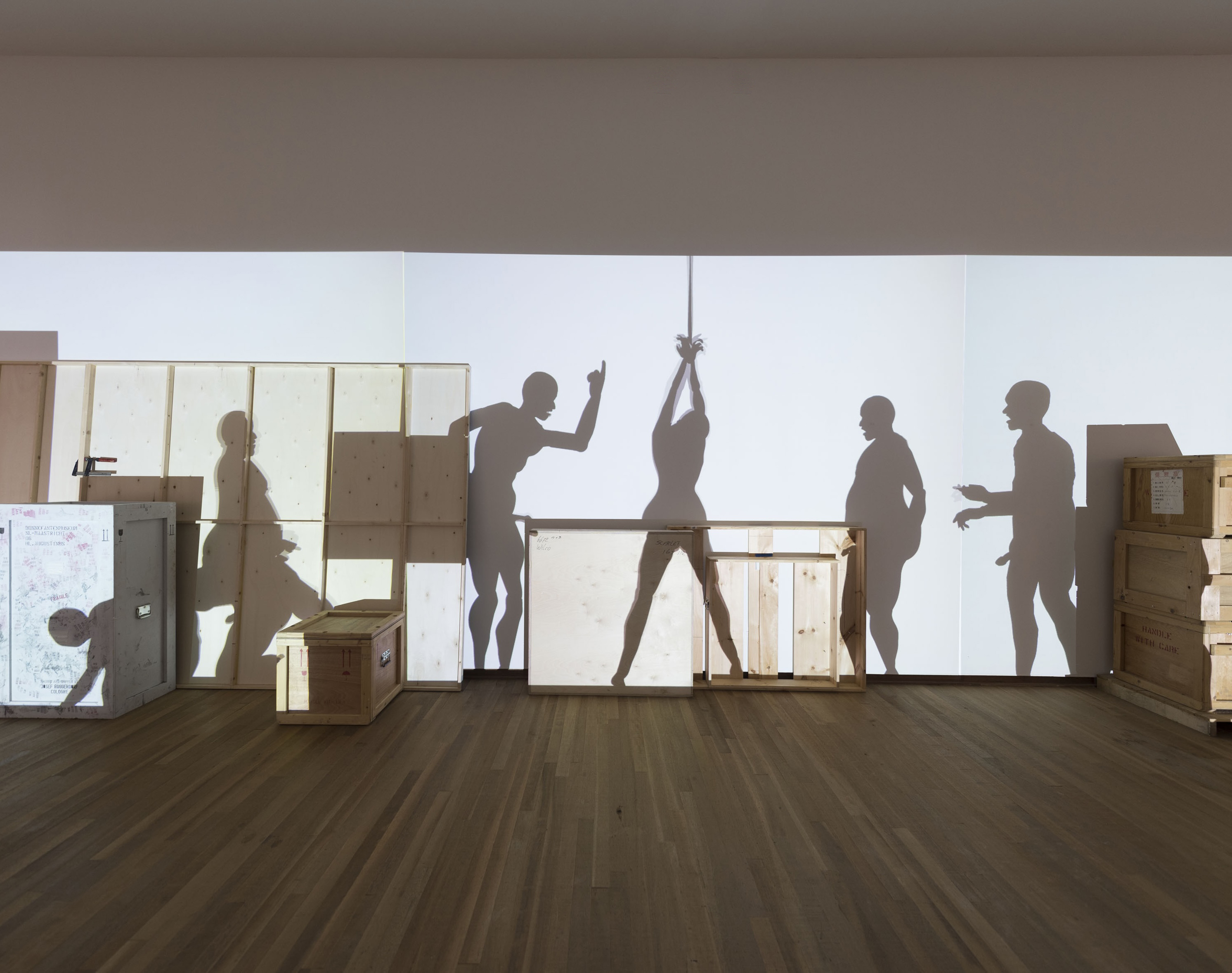
Paul Chan, Sade for Sade's Sake, 2009, digital projection. Collection Bonnefanten
Paula van den Bosch, curator 'Four times Two'
"Mary Heilmann is one of the many independent women featured inFour times Two.She pursued her own artistic path, independent of the male examples of abstract art in her environment."
Four times Two
Four times Two (1967), an artwork of four knots by the Japanese-American artist Shinkichi Tajiri, forms the trigger and the starting point for this collection presentation, which spans half a century (1965 - 2015). Tajiri’s exposure to racism and exclusion had a decisive influence on his life and work. As a young man he experienced war and hatred, and he yearned for solidarity. Tajiri’s distinctive knot is a recognisable symbol of connection and unity all over the world. Bringing people together, however, is no easy task. It requires courage and an environment that does not recoil from things that are different or unfamiliar. And not everything can be solved just like that. Shinkichi Tajiri’s knot stands for that as well: the world is complex and confusing, and human relationships are often complicated.
Connection, unity, contrasts
In this exhibition, each room shows work by four artists: the number of knots in Four times Two. The works are all very diverse with regard to their creation period, subject, theme or appearance. So the question is: what do they have in common? Everyone looks at things differently and makes different connections, and over time art shows other and new perspectives. The exhibition is mainly an invitation to go in personal search of the underlying ideas, emotions, messages or symbolism that connect these artworks, across time and cultural differences, both to each other and to us.
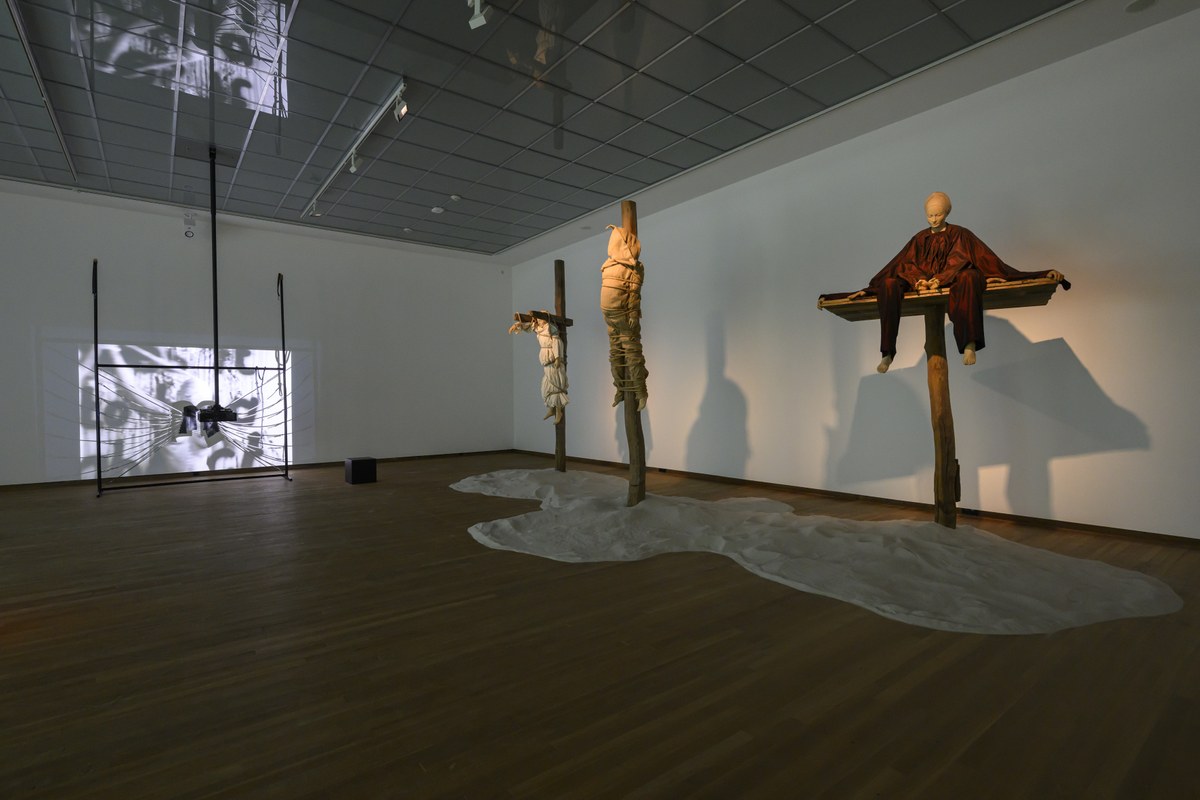
Exhibition overview Four times Two, with works by Lydia Schouten and Paloma Varga Weisz, Bonnefanten 2025. Photo Peter Cox
Four times Two includes works by:
Francis Alÿs, Paul Chan, Peter Doig, Mary Heilmann,Thomas Hirschhorn, Suchan Kinoshita, Jos Kruit, Mario Merz, Charlotte Lagro, Sol LeWitt, Laura Owens, Roman Signer, Carol Rhodes, Lydia Schouten, Shinkichi Tajiri, Sanne Vaassen, Luciano Fabro, Paloma Varga Weisz and Richard Serra.
Header: Shinkichi Tajiri, Four times Two (4x2), 1967, polyester, 100 h x 100 w x 40 d cm. Collection Bonnefanten. Photo Jonathan Vos